Through the establishment of the African Continental Free Trade Area (AfCFTA), Africa has set out to build an integrated continental market, accelerate industrialization and strengthen its position in the global economy. Yet a contradiction persists: the very women who drive a significant share of Africa’s trade remain underrepresented in the decisions shaping its future.
This contradiction must end.
Women should not simply be invited to participate in the AfCFTA. They must help shape it, lead it and determine its priorities. Their leadership is not merely a matter of gender equality. It is a strategic condition for the success of Africa’s economic integration.
Women Are Already Driving African Trade
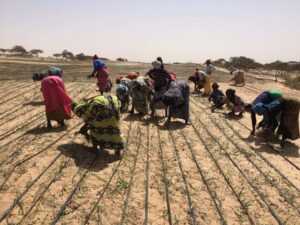
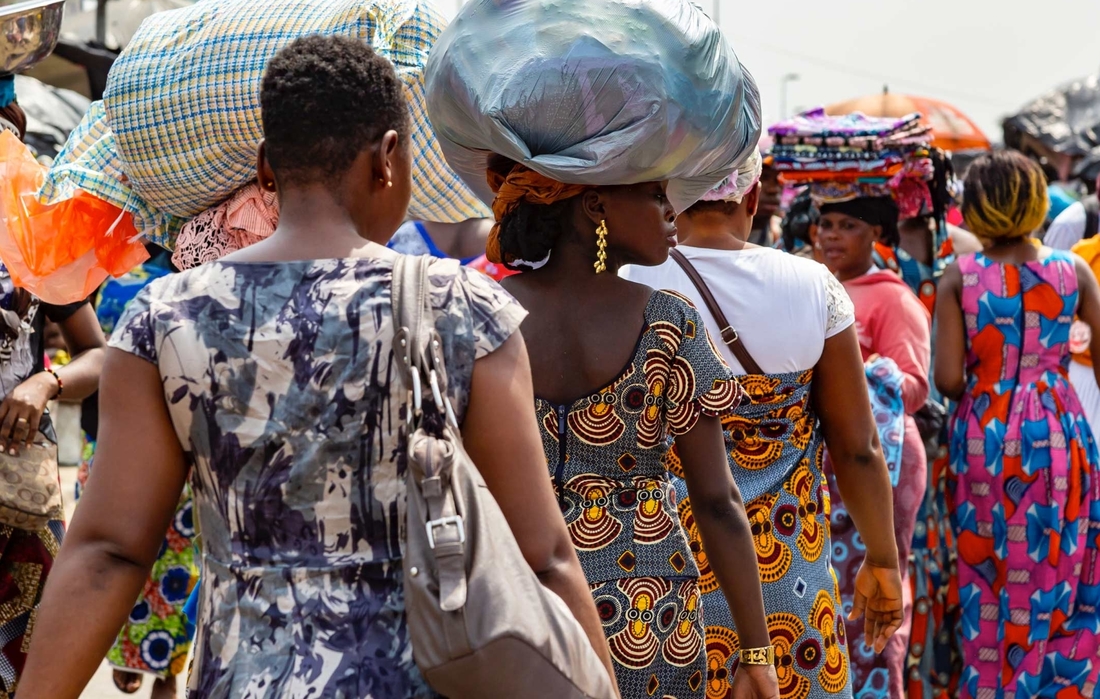
In markets, on farms, in small businesses and along cross-border trade corridors, women are at the heart of economic activity. They produce, process, transport and sell goods, connecting local economies to regional markets.
The figures speak for themselves. In the border area between Cameroon, Gabon and Equatorial Guinea, for example, women account for 67% of informal cross-border trade operators and conduct 61% of export activities, according to a study by the United Nations Economic Commission for Africa (UNECA, 2025). These figures are not representative of the entire continent, but they reveal an economic reality that is too often overlooked.
How can Africa claim to be building an integrated continental market without placing at its centre the very women who already help keep it running?
The problem, therefore, is not that women are absent from trade. It is that they remain underrepresented in the spaces where rules are set, priorities are established and financing mechanisms are designed.
Trade Liberalization Cannot Succeed by Ignoring Realities on the Ground
For policymakers, free trade often translates into tariff reductions, trade agreements and harmonized customs procedures. Yet a woman crossing a border every day experiences a very different reality. She faces complex administrative requirements, unexpected fees, limited access to finance, corruption, harassment and inadequate access to trade information.
A study of women traders in Africa found that 49.7% considered the complexity of administrative and documentary requirements a major obstacle to their business activities (UN Women, UNDP and AfCFTA Secretariat, 2022).
This raises an important question: how can effective trade policies be designed without giving a meaningful voice to those who experience their shortcomings every day?
Women must have a say in shaping trade policies because they understand barriers that macroeconomic statistics do not always capture. Their experiences should inform customs reforms, financing mechanisms, border infrastructure and digital platforms.
Trade policies that overlook these realities risk making cross-border trade easier for large corporations while leaving small-scale women traders behind.
The AfCFTA Cannot Succeed Without Women’s Economic Leadership
The AfCFTA is built on the ambition of creating a functioning continental market. Yet, despite the considerable efforts made by African countries, the continent remains a long way from achieving this goal. As long as women remain concentrated in low-value-added economic activities and face barriers to accessing more profitable sectors, this ambition will remain incomplete.
Africa must enable women-led businesses to move beyond subsistence trading and expand into agribusiness, manufacturing, logistics, technology and professional services.
This requires meaningful access to credit, public procurement, technology, infrastructure and business networks. It also means strengthening women’s representation in business associations, trade negotiations and the institutions responsible for implementing the AfCFTA.
The Protocol on Women and Youth in Trade, adopted in February 2024, represents an important step forward. It recognizes the need to improve women’s access to finance, facilitate cross-border trade and strengthen their participation in continental value chains (African Union, 2024).
But institutional commitments alone are not enough. No matter how ambitious a protocol may be, it will not transform a single business unless it translates into accessible financing, simplified procedures and tangible economic opportunities.
It Is Time to Move Women from Beneficiaries to Decision-Makers
Africa must move beyond an approach that views women merely as a vulnerable group in need of support. Women are also entrepreneurs, investors, producers, negotiators and drivers of economic transformation.
Their place must be secured in national AfCFTA implementation committees, chambers of commerce, business associations and continental decision-making bodies.
This is not about giving women symbolic visibility at conferences or consultations. It is about ensuring that they have a genuine influence on trade policies and economic decisions.
African governments should, in particular, establish measurable targets for women’s representation, improve women-led businesses’ access to public procurement and financing, and regularly publish data to assess progress.
However, the responsibility for addressing these inequalities must not fall on women themselves. It also rests with governments, financial institutions and the organisations tasked with building the continental market.
Africa Must Make a Choice
Africa cannot claim to be pursuing ambitious economic integration while keeping women who contribute daily to its economies on the margins of decision-making.
The true success of the AfCFTA will not be measured solely by reductions in tariffs, growth in trade volumes or the number of trade agreements concluded. It must also be measured by the continent’s ability to empower women to become influential drivers of its economic transformation.
It is time to move from recognition to representation, from participation to leadership, and from political commitments to tangible economic results.
Africa does not simply need more women in trade. It needs women who shape the rules, lead institutions and build the businesses that will make the continental market a success.